Canonical
on 7 March 2018
Popular programming language, Kotlin, launches as a snap for Linux
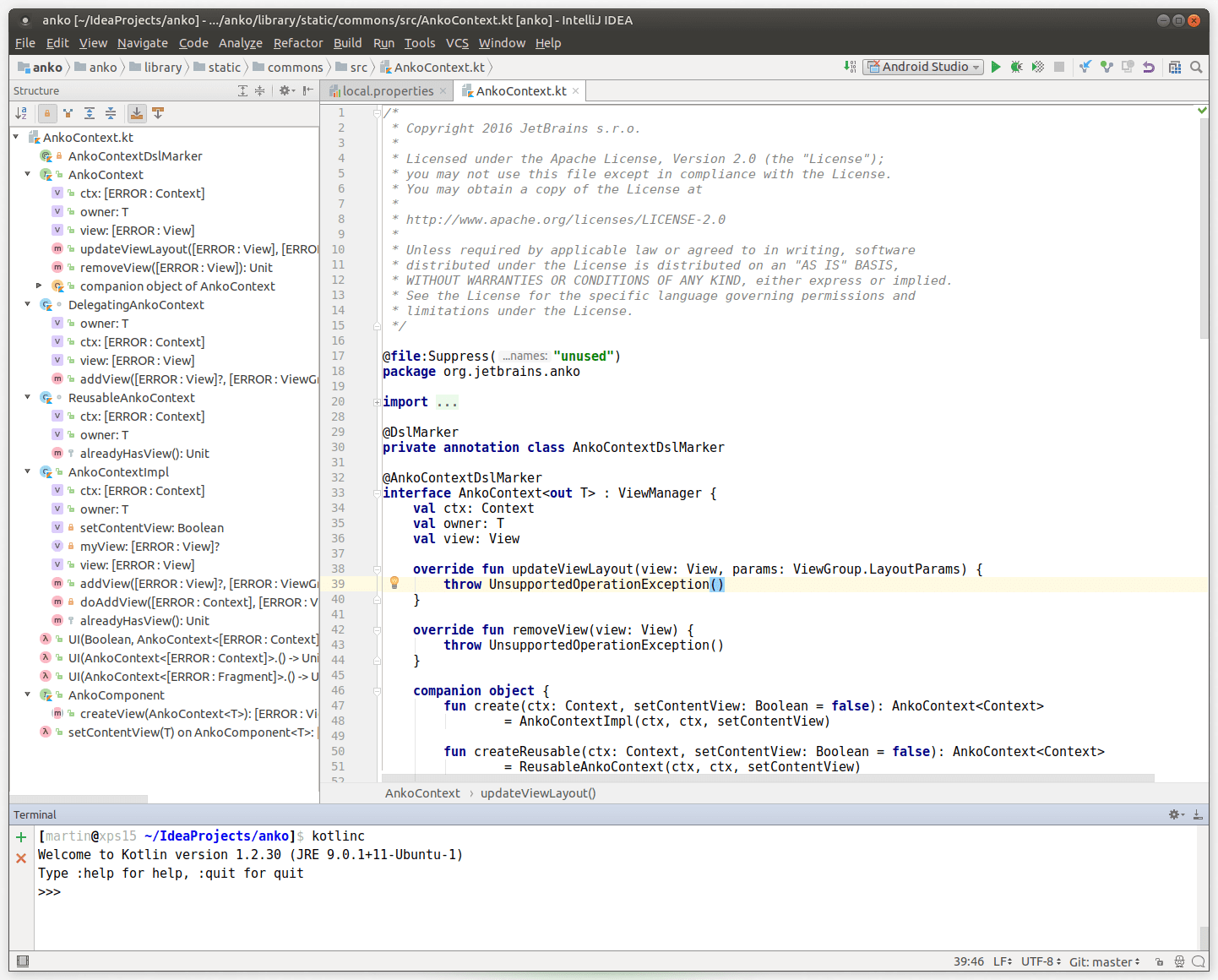
We are delighted to announce that the latest addition to the snap ecosystem, launching today, is Kotlin – the pragmatic programming language for JVM, Android and browser crafted by JetBrains. Being a general-purpose language, Kotlin works everywhere where Java works from server-side applications, mobile applications (Android) and desktop applications.
Particularly popular amongst Android developers who have to use Java, Kotlin is focused on interoperability and seamless support for mixed Java+Kotlin projects, making adoption easier leading to less boilerplate code and more type-safety. Kotlin works with all major tools and services such as GitHub, Slack, Android Studio, Spring, Vert.x and even Minecraft to name a few.
By delivering Kotlin as a snap, JetBrains has created an onboarding experience for the development tools that is as smooth as the language itself. With a single click, developers can have a neatly packaged and always up to date Kotlin, IntelliJ IDEA, PyCharm and other IDEs in the JetBrains portfolio.
“We believe the main advantage of using Snapcraft to install Kotlin for the development community is that developers don’t have to care about all the required dependencies (like JDK) as well as about future updates”, says Aleksey Rostovskiy, Engineer at JetBrains. “With snap packages, developers can seamlessly install Kotlin and all the required dependencies just once and from then on the update process happens in the background, so they always stay on the latest version available”.
“In choosing Snapcraft, JetBrains continues to show confidence in a platform that enables Kotlin and Java developers to bring their software to tens of millions of Linux users.” said Jamie Bennett, VP of Engineering, Devices and IoT at Canonical. “Kotlin is proving extremely popular and adding it to the wealth of developer-focused snaps already available provides an incredibly powerful platform to produce and distribute software.”
The Kotlin snap will work natively on all Linux distributions that support snaps, including Linux Mint, Manjaro, Debian, Arch Linux, OpenSUSE, Solus, and Ubuntu. Snaps are containerised software packages designed to work securely within any Linux environment across desktop, cloud and IoT devices which compliments Kotlin’s traits of working across a similar subset of devices and servers. Thousands of snaps have been launched since 2016, with its appeal coming from the automatic updates and roll-back features, plus security benefits, allowing greater flexibility for developers.
Kotlin is available as a snap by clicking here or running snap install kotlin –classic on any system with snap support enabled.